Welcome to Hunan Shengtong New Materials Technology Co., Ltd!
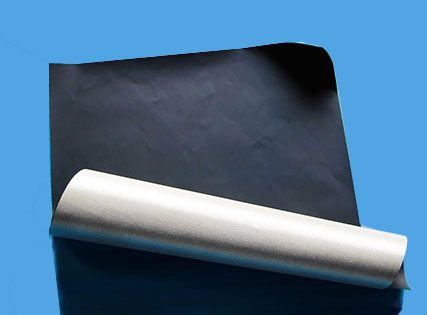
The single-insulated series of single-sided black conductive fabric is made by coating the surface of polyester fibers with metals such as copper and nickel, followed by a treatment with a black water-based graphene electromagnetic shielding coating on one surface. (1) The combination of copper and nickel provides excellent electrical conductivity. (2) The inherent conductive property of the graphene electromagnetic shielding coating can greatly enhance the conductivity of the composite material, achieving good shielding effectiveness in the frequency range from 10MHz to 3GHz. (3) The resistance of the polymer insulating coating exceeds 10⁶ Ω, which can meet the requirements of special manufacturing processes. (4) The blackening treatment also has properties such as light shielding, oxidation resistance, corrosion resistance, and fingerprint resistance.
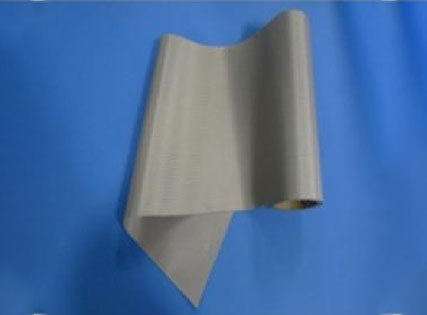
The anti-oxidation conductive non-woven fabric is a gray-based flexible shielding material with solvent penetration resistance. Adopting advanced formula technology, the surface of the conductive non-woven fabric undergoes special treatment, which can prevent the penetration of solvents such as water, alcohol and ethyl acetate, as well as the fingerprint problem caused by sweat on hands during installation and operation. In addition, it solves the problems that the material is prone to surface oxidation and the conductive shielding efficiency is reduced when working in high-temperature and high-humidity environments, and greatly improves the wear resistance of the material.
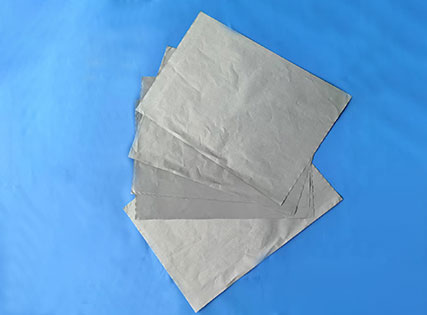
This is a high-performance, ultra-thin conductive composite material, specially designed for demanding electromagnetic shielding (EMI), electrostatic protection (ESD) and signal integrity applications. Its core advantages lie in integrating excellent conductivity, outstanding broadband electromagnetic shielding effectiveness, reliable anti-oxidation/anti-corrosion capabilities, excellent environmental barrier properties and convenient processability, while maintaining the unique silver-gray appearance of conductive cloth.
Conductive microporous membrane is a new type of composite material that combines a microporous structure with conductive functionality. Its micropore size is usually in the nanometer to micrometer range, and the base materials include polymers, metal nanofibers, or carbon-based materials. By loading conductive components, it is endowed with conductivity while retaining the permeability and separation functions of the microporous structure.
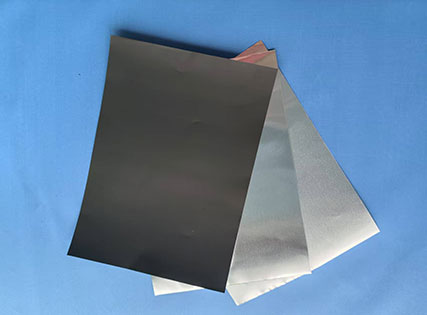
Single-sided black insulating aluminum foil is a composite functional material based on an ultra-thin metal substrate. Its structural design features a single side coated with a black insulating layer, while the other side retains the original metallic color. This material combines multiple properties: the black insulating side provides high resistivity to block current conduction, preventing circuit short circuits, and at the same time reduces optical reflection; the metallic side maintains excellent electrical conductivity and thermal conductivity. Through a precision coating process, an ultra-thin integrated structure is achieved, which exhibits excellent performance in terms of flexibility, processability (supporting die-cutting/laser cutting), and environmental adaptability (temperature resistance from -40℃ to 400℃, flame retardancy meeting UL94V0 standard, and compliance with RoHS). It provides a synergistic solution for electromagnetic shielding, insulation protection, and thermal management in electronic devices.
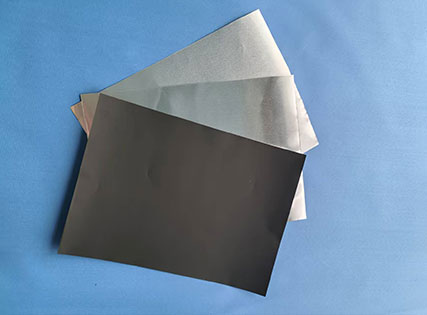
Single-sided black conductive aluminum foil is a composite functional material based on metal copper foil, with an ingenious structural design: one side retains the metallic primary color, while the other side is coated with a special black conductive layer. This material usually adopts advanced roll-to-roll sputtering technology or nano-coating technology to realize functional coatings on ultra-thin metal substrates. In terms of thickness control, the material has broken through key technical bottlenecks, and the aluminum foil can be customized to specifications of less than 35μm. At the same time, through precision manufacturing processes, the material maintains excellent physical properties even in an ultra-thin state. In terms of surface characteristics, the material has double-sided conductivity. Among them, the surface resistance of the black side is strictly controlled at an extremely low level of ≤0.05Ω, ensuring excellent current conduction and electromagnetic shielding efficiency. The metallic primary color side shows high gloss, and the color difference value can be adjusted through customized production processes to meet the strict requirements of various high-end electronic devices for appearance aesthetics. The overall structural design of the material is scientific and reasonable, usually including three functional layers: the metal substrate layer (providing mechanical support and basic thermal conductivity), the black conductive layer (realizing EMI shielding and thermal radiation), and the optional adhesive layer (facilitating installation and fixation). The multi-layer structure works synergistically to endow the material with comprehensive performance advantages.
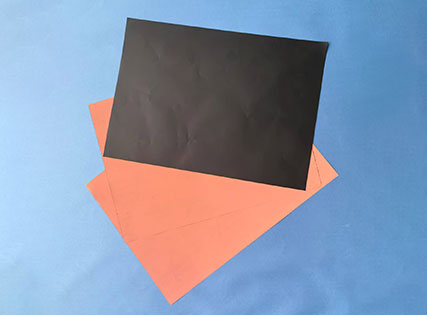
Single-sided black insulating copper foil is a composite functional material based on an ultra-thin metal substrate. Its structural design features a black insulating layer coated on one side, while the other side retains the original metallic color. This material possesses multiple characteristics: the black insulating side provides high resistivity to block current conduction, preventing circuit short circuits, and at the same time reduces optical reflection; the metal side maintains excellent electrical conductivity and thermal conductivity. The ultra-thin integrated structure is achieved through a precision coating process, exhibiting excellent performance in flexibility, processability (supporting die cutting/laser cutting) and environmental adaptability (temperature resistance from -40℃ to 400℃, flame retardancy meeting UL94V0 standard, and compliance with RoHS). It provides a synergistic solution for electromagnetic shielding, insulation protection and thermal management in electronic devices.
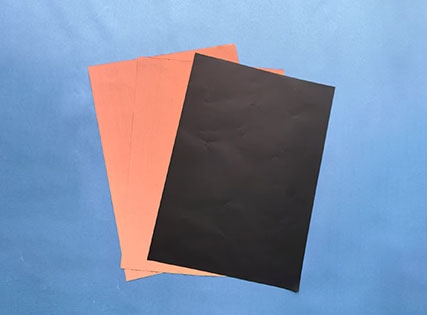
Single-sided black conductive copper foil is a composite functional material based on metal copper foil, with an ingenious structural design: one side retains the original metallic color, while the other side is covered with a special black conductive layer. This material usually adopts advanced roll-to-roll sputtering technology or nano-coating technology to realize functional coatings on ultra-thin metal substrates. In terms of thickness control, the material has broken through key technical bottlenecks, and the copper foil can be customized to specifications of less than 27μm. At the same time, through precision manufacturing processes, the material maintains excellent physical properties even in an ultra-thin state. In terms of surface characteristics, the material has double-sided conductivity. The surface resistance of the black side is strictly controlled at an extremely low level of ≤0.05Ω, ensuring excellent current conduction and electromagnetic shielding performance. The metallic original color side presents high gloss, and the color difference can be adjusted through customized production processes to meet the strict requirements for appearance aesthetics of various high-end electronic devices. The overall structural design of the material is scientific and reasonable, usually including three functional layers: a metal substrate layer (providing mechanical support and basic thermal conductivity), a black conductive layer (realizing EMI shielding and thermal radiation), and an optional adhesive layer (facilitating installation and fixation). The multi-layer structure works synergistically to endow the material with comprehensive performance advantages.
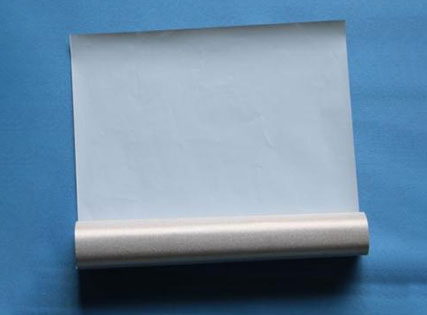
White conductive cloth is a flexible shielding material with conductive properties, composed of multiple layers of fiber materials, conductive materials, and functional materials. Its chromaticity L value can be close to that of ivory white. In addition to having the same characteristics as black conductive cloth, it can also be used to make white shielding and light-shielding curtains, shielding clothing, household items, etc., as well as white shielding partitions, shielding wallpapers and other products.
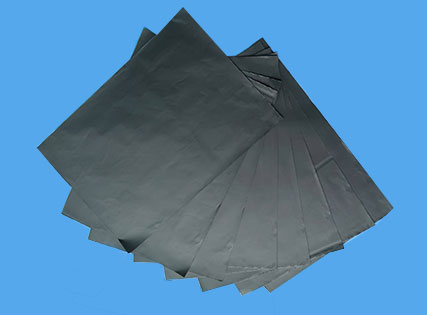
The blackened light-shielding series of double-sided black conductive cloth is made by coating the surface of polyester fibers with metals such as copper and nickel, followed by treating both surfaces with a black water-based graphene electromagnetic shielding coating. (1) The combination of copper and nickel provides excellent conductivity. (2) The inherent conductive property of the graphene electromagnetic shielding coating can significantly enhance the conductivity of the composite material, and good shielding effectiveness can be achieved in the frequency range from 10MHz to 3GHz. (3) The blackening treatment also has properties such as light shielding, oxidation resistance, corrosion resistance, and fingerprint resistance.
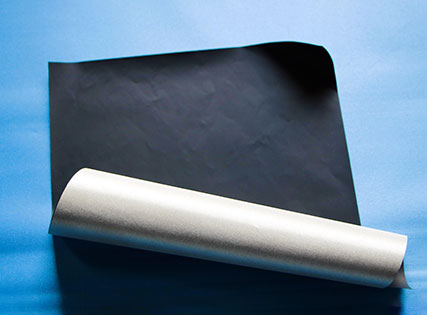
The 20-micron wear-resistant black conductive cloth is a high-performance composite material. It uses polyester fiber as the base material, with both sides coated with copper-nickel alloy to provide basic conductivity (surface resistance ≤ 0.05Ω), and one side coated with a black water-based graphene coating. Its core thickness is 25 ± 3 microns (22-28μm), belonging to a thin design. The product has unique double-sided conductive properties: one side is silver-gray, and the other side is regular matte black (with a reddish-black hue and a glossiness of approximately 2.5), and both sides have extremely low surface resistance (≤ 0.05Ω). The surface of this conductive cloth has undergone wear-resistant treatment, which significantly improves its durability. It supports direct die-cutting or adhesive processing, with strong process compatibility. Overall, it is a high-performance, environmentally friendly, and easy-to-process thin double-sided conductive material. Moreover, it can be custom-developed according to specific customer needs.

The 50-micron wear-resistant black conductive cloth is a high-performance composite material. It uses polyester fiber as the base material, with both sides coated with copper-nickel alloy to provide basic conductivity (surface resistance ≤ 0.05Ω), and one side coated with a black water-based graphene coating. The conventional black conductive cloth, with a thickness of 53±3μm, features ultra-low surface resistance (≤0.05Ω) and excellent wear resistance. Its surface is flat, smooth, free of impurities and defects, with neat edges without damage. It meets strict gloss standards (3±1gs) and color difference standards (Lab values: 26.55/0.09/-0.25). Adopting a purely water-based environmental protection coating process, it has no VOC residues, supports direct die-cutting or composite adhesive processing, and is suitable for the needs of efficient production lines.
About Us- Products- Cases- Industry- Contact Us- news and information- Equipment- Test- Intellectual- Honor- Inspection report- financing demand

Contact Number15874186240
 Zone C, Agricultural Science and Technology Park, Qu Yuan Management District, Yueyang City, Hunan Province

Official Tiktok


Copyright ©2019-2023.All Rights Reserved.Hunan ICP No. 2022025160-1
Hunan Shengtong New Material Technology Co., Ltd. All rights reservedTechnical Support: Shenyang Cloud Technology Co., Ltd


 中文版
中文版 English

 financing demand