Welcome to Hunan Shengtong New Materials Technology Co., Ltd!
Electromagnetic Shielding and Grounding of Camera Modules in Smartphones
Application Background
In the design of smartphones, camera modules are vulnerable to internal high-frequency signals (such as 5G RF) or external electromagnetic interference (EMI), which can lead to imaging noise or signal distortion. Single-sided black conductive fabric, with its excellent conductivity, flexibility and light-blocking properties, has become one of the solutions.
Specific implementation steps
Material selection
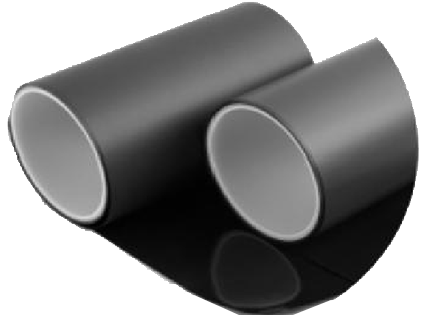
The plain single-sided black conductive fabric is made of polyester fibers coated with copper/nickel. The black side is the conductive layer, while the other side is the insulating layer.
Features:
Surface resistance ≤ 0.1Ω/sq (conductive in XYZ three directions)
Thickness: 0.05 - 0.1mm, suitable for narrow spaces.
The black coating has both light-blocking properties and reduces stray light interference.
Installation method
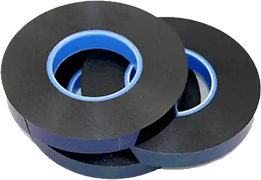
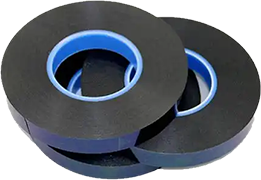
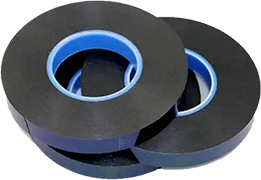
Shielding the package: With the black conductive side of the conductive fabric facing inward, tightly wrap the metal casing of the camera module. Secure the edges with conductive tape to form a Faraday cage effect, shielding against external electromagnetic waves.
Grounding treatment: Connect the conductive fabric to the grounding terminal of the mainboard with conductive tape to ensure the ESD discharge path.
Effect Verification
EMI test: In the frequency band of 1 GHz to 6 GHz, the shielding effectiveness is ≥ 60 dB (refer to 3M laboratory data).
Imaging test: Compared with the unshielded module, the noise is reduced by more than 30% (actual case from Transsion mobile phone design).
Advantage Analysis
Lightweight: Compared with metal shielding covers, the weight is reduced by 50%.
Flexible adaptation: Can fit curved surface structures (such as the irregular space around the lens).
Cost-effectiveness: Domestic alternative solutions can reduce costs by 20%.
Extended Applications
Similar solutions can also be applied to:
Grounding of flexible display screens (such as FPC line shielding in foldable screen mobile phones)
Automotive radar sensor (anti-signal interference)
wearable devices (such as smartwatches)
Previous article:This is already the first article
Next article:Packaging of battery packs for new energy vehicles
Return to List
Electromagnetic Shielding and Grounding of Smart Phone Camera Modules Application Background
2025-05-14
Packaging of battery packs for new energy vehicles
2025-05-14
Electromagnetic radiation resistance of medical equipment
2025-05-14
Industrial high-frequency furnace electromagnetic protection furnace
2025-05-13About Us- Products- Cases- Industry- Contact Us- news and information- Equipment- Test- Intellectual- Honor- Inspection report- financing demand

Contact Number15874186240
 Zone C, Agricultural Science and Technology Park, Qu Yuan Management District, Yueyang City, Hunan Province

Official Tiktok


Copyright ©2019-2023.All Rights Reserved.Hunan ICP No. 2022025160-1
Hunan Shengtong New Material Technology Co., Ltd. All rights reservedTechnical Support: Shenyang Cloud Technology Co., Ltd


 中文版
中文版 English

 financing demand